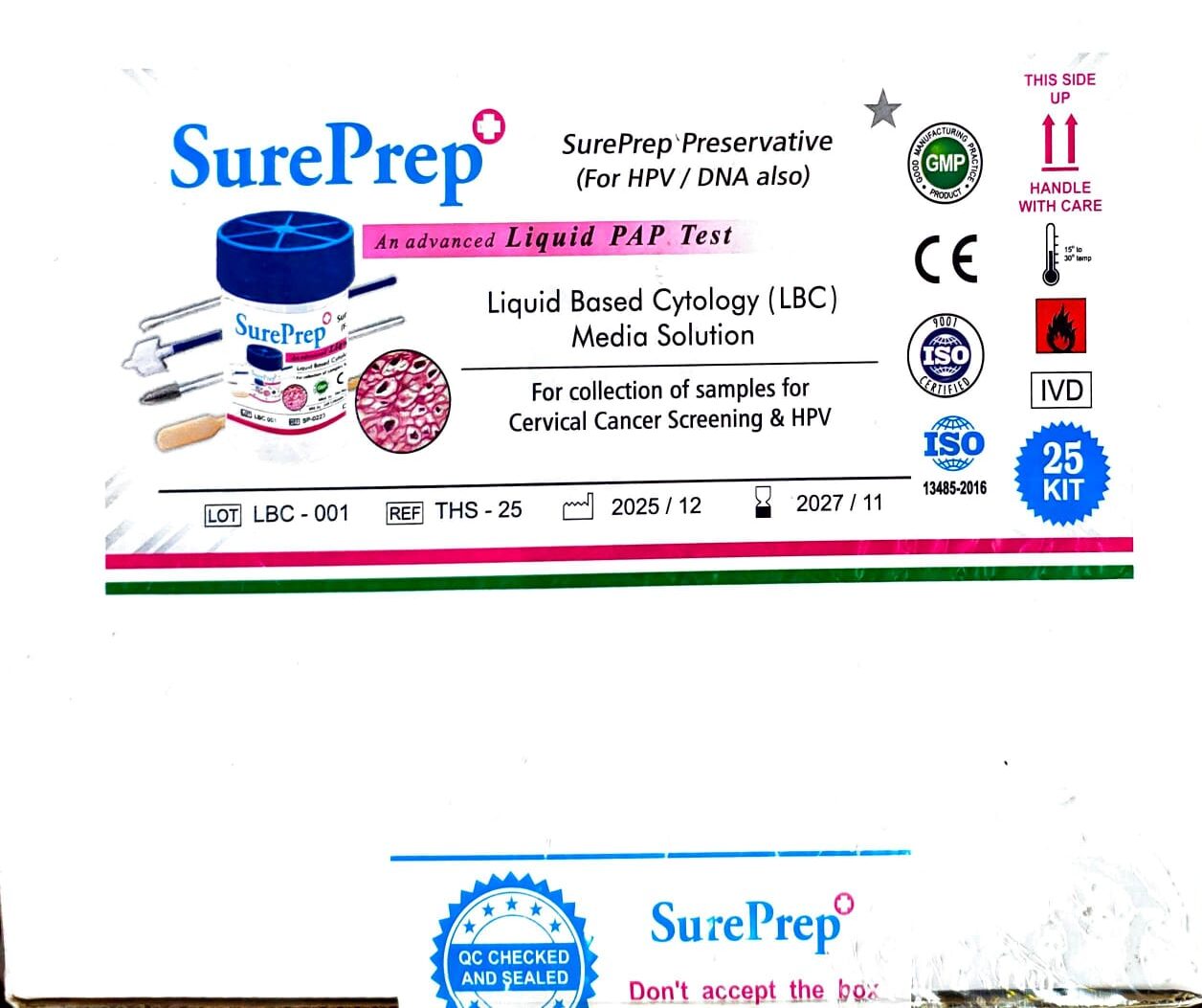
Pap Smear kit
A PAP Smear is a screening test that checks the cells in the cervix for any abnormalities or indications of cancer. A healthcare provider will take a sample from the cervix (the part of the body that connects the lower end of the uterus to the vagina). They will use a swab or a gentle brush to swipe around the cervix. This sample is then preserved per regulations and sent to the lab for further analysis.
A PAP smear test will check the sample for various infections, HPV or any changes in the cervical cells that may turn cancerous in the future. It can also help detect cancerous cells if any are present in the cervix.
Importance of PAP Smear
Cervical cancer though preventable can quickly turn serious if not detected and treated in its early stages. Women who are sexually active, have a family history of HPV or cervical cancer or have a weak immune system are at a higher risk of contracting infections that can lead to cervical cancer. Even taking contraceptive pills continuously for more than 5 years increases the risk of cervical cancer.
Though a PAP Smear cannot detect STIs like Gonorrhoea or Chlamydia, it can detect yeast infections, bacterial overgrowth or even trichomonas (an STI). When such infections continue to stay in the cervix, they can cause inflammations that the body can struggle to fight. Over the course of time, these infections and inflammations will cause changes in the cervical cells and turn them cancerous.
When you detect such infections or changes in the cervical cells through a PAP smear, your doctor can start treating the infections immediately. When the infection clears out, it removes the risk of cervical cancer completely. A PAP smear is very important for this very purpose.
PAP Smear Age Recommendation
Once a woman turns 21, she can consult her gynaecologist and take a PAP smear test. The frequency of the test will vary according to factors like – sexual activity, number of partners, health history, results of previous tests if any and a history of cervical cancer.
Here are the general recommendations based on one’s age:
- Below 21 Years – A PAP smear is not needed
- 21 to 29 Year – Once in three years
- 30 to 65 Years – If taking only a PAP Smear – once in 3 years. If combining it with an HPV test – once every 5 years.
- Above 65 Years – Not needed anymore unless you have a history of cervical cancer, abnormal PAP smear test results in the past, recent changes in sexual activities or had a total hysterectomy.
If you have a history of cervical cancer, irregular PAP smear test results, are undergoing chemotherapy or suffer from any immunity-compromising health conditions, you should take the PAP smear tests regularly as you are more prone to contracting HPV.
PAP Smear Procedure
A PAP Smear is done in the following manner:
Step 1 – Prepare for the test by changing into a hospital gown, emptying your bladder and lying on the table with your legs bent or up in stirrups.
Step 2 – The medical professional will insert a warm speculum into your cervix to keep it open.
Step 3 – after cleaning the cervix, they will use a cotton swab, a spatula or a soft brush to scrape the sides of the cervix and collect a sample.
Step 4 – The sample is preserved as per protocol and patient details are entered to ensure the sample does not get misplaced when sent to the lab.
Step 5 – They will remove the speculum and give you time to collect yourself, change and you can leave.
How to Prepare for PAP Smear?
If you are about to get your first PAP Smear, chances are you are a little nervous and have many doubts regarding the procedure itself and how you can prepare for it. Here are a few pointers to follow before you go in for your test:
- Avoid vaginal sex for two days before the test.
- Don’t let anything come in contact with the vagina for a minimum of two days before the test – avoid tampons, vaginal lubrications, creams, medications or birth control foams. Avoid douching as well as this can interfere with the natural balance in the vagina, thus impacting test results.
- Always schedule your appointment 5 days after your period is set to end. This way, even if your period were to start a day or two late, your period would be over before the test. If you have your period on the day of the appointment, call the clinic to find out alternatives.
- Empty your bladder before the procedure and stay calm during the test. The better you cooperate; the sooner it will be done.
What to Expect from First PAP Smear?
Nervous about the side effects and aftereffects of your first PAP Smear test? Here is what you can expect:
- The entire procedure can be mildly uncomfortable but should not cause severe pain.
- The use of a speculum to keep the vagina open and scraping the cells from the cervix can cause mild cramping during or after the test.
- You may experience light bleeding soon after the test. If needed, use a sanitary pad to prevent staining your clothes.
- The test results can be false negative or positive. Sometimes, it can be inconclusive if the sample is not sufficient.
- If you notice heavy bleeding, a foul-smelling discharge, severe cramping/abdominal pain or a fever, you should contact your doctor immediately and get checked without any delay.
Final Thoughts
A PAP smear test can be very helpful in detecting cervical cancer even before the cells turn cancerous. Regular screening can help catch infections at the earliest and start relevant treatment before it can impact the body. Consult your gynaecologist and take this test as and when recommended. A little discomfort can go a long way in preventing something as serious as cervical cancer.